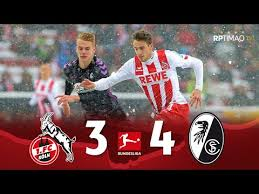

The 2017/2018 Bundesliga season offered a clear laboratory for studying how mid‑season coaching changes ripple through betting markets and actual results. When a club sacks a manager during a campaign, bookmakers, models, and bettors must all quickly reassess team strength under incomplete information. Understanding the typical performance patterns after a coaching switch, and how odds adjust in response, helps bettors separate genuine edges from media‑driven overreactions.
Why it makes sense to focus on coaching changes from a betting angle
Coaching changes are one of the few visible structural shocks within a season, often occurring precisely when a club is underperforming expectations. Because they happen suddenly and are accompanied by intense coverage, they tend to produce immediate shifts in market sentiment, sometimes before any concrete evidence about tactical improvement or player response appears. For value‑oriented bettors, that lag between narrative and verifiable performance can create either opportunity or danger, depending on how markets price the transition period.
Academic research on elite soccer from 2010/2011 to 2017/2018 shows that teams typically experience a short‑term improvement in points per match after a coaching change, with the effect fading after roughly ten games. This “new manager bounce” pattern implies that bookmakers must front‑load some optimism into early post‑change odds, but not so much that they overprice the bounce relative to underlying quality. Bettors who understand both the statistical tendency and its limits are better equipped to judge when the odds move too far or not far enough.
How 2017/2018 Bundesliga coaching changes actually unfolded
The 2017/2018 Bundesliga season saw notable shifts in the dugout, including Bayern Munich’s mid‑autumn transition from Carlo Ancelotti to Jupp Heynckes after a turbulent start to the campaign. Under Heynckes, Bayern’s form surged, winning the league with five games to spare and effectively resetting expectations for both domestic and European contests. Other clubs also experienced in‑season managerial changes in response to poor runs, though with less spectacular rebounds than Bayern’s example suggests.
These moves did not occur in isolation. They interacted with league dynamics in the title race, European qualification, and relegation battles, meaning each change carried different stakes. For a top club, a coaching shift can be framed as a move from “underperforming title favourite” back toward its baseline strength, while for a struggling side, it is often a desperate gamble on survival. The impact on odds therefore depends not just on the identity of the new coach, but on how the club’s pre‑change performance compared to longer‑term expectations.
Mechanisms: how a new coach affects team performance and market perception
The immediate effect of a coaching change usually combines tactical tweaks, altered training loads, and a psychological reset. Studies on coaching succession in elite football show a statistically significant short‑term uplift in results, independent of factors such as coach experience or whether the new manager was a former elite player. This suggests that the main early benefit stems from disruption itself: players increase intensity, fringe squad members see fresh opportunity, and opponents have limited data on the new setup.
Short‑term bounce vs. long‑term regression
Mechanistically, the post‑change period can be separated into two overlapping phases:
- Short‑term bounce phase (roughly first 5–10 league matches)
- Stabilisation phase, where performance regresses toward the level implied by squad quality and resources
In the bounce phase, a new coach may introduce simplified tactical instructions, reduce role confusion, or adjust pressing triggers to immediately restore cohesion. Empirical work on multiple European leagues confirms that teams often gain more points per match in this window than they did under the outgoing coach, after which results normalize. For bettors, the cause–outcome–impact sequence here is crucial: sacking decisions are generally triggered by underperformance, so some degree of rebound would likely have occurred anyway due to regression to the mean, even without a coaching change.
As the stabilisation phase begins, deeper constraints—budget, squad depth, age profile—reassert themselves, and the new coach’s true tactical value becomes easier to separate from short‑term motivational spikes. Bettors who continue to price a club as if the bounce is permanent risk overestimating its long‑run strength, especially when early wins came against weaker opposition or relied on unsustainably high conversion rates.
How odds typically move around a coaching change
When a coaching switch is announced, bookmakers must immediately adjust prices for upcoming fixtures before any new performance data arrives. In practice, this adjustment often reflects two competing stories: optimism around a fresh start and caution about tactical uncertainty. Articles and betting guides on coaching changes note that markets may initially overreact to the narrative, shortening prices on the affected team without fully accounting for matchup specifics or squad limitations.
For example, a team that has collected poor results despite solid underlying metrics might genuinely deserve shorter odds once a coach aligns tactics more sensibly with the squad. Conversely, a club with low xG, fragile defence, and limited depth is unlikely to transform into a top‑half side solely because the coach changes, even if short‑term morale spikes. Betting content that analyses strategy shifts stresses the importance of assessing the new coach’s historical style, roster fit, and the schedule of upcoming opponents before assuming that odds moves accurately capture the new reality.
In the specific context of 2017/2018, Bayern’s move to Heynckes is a classic case where markets had to recalibrate quickly from “strong but erratic favourite” back toward “dominant title winner,” as results and performances rapidly improved. For smaller clubs that changed coaches, the shifts were subtler: odds compressed slightly in the first few matches, but long‑term pricing still reflected underlying resource gaps evident in the final table.
Comparing coach profiles: when should bettors care most?
Not every coaching change affects betting value in the same way. Differences in tactical identity, past performance, and fit with the existing squad shape both real outcomes and market expectations. Bettors therefore benefit from classifying changes into archetypes rather than treating all appointments as interchangeable shocks.
The following table illustrates how different coaching‑change profiles can influence odds and potential betting edges, drawing on general findings about performance after appointments and the resource constraints documented in studies of elite leagues.
| Coaching change archetype | Short‑term effect on prices | Longer‑term betting implication |
| Elite veteran replacing underperforming coach at a big club | Odds shorten quickly, favourite status reinforced | Bounce often real but quickly priced in |
| Pragmatic organiser at struggling side | Slight compression, more respect as underdog | Value may arise if defence genuinely tightens |
| Attacking ideologue with misfit squad | Initial hype, possible overs bias | Risk of overpricing goal markets and results |
| Promoted assistant or novice | Minimal initial odds change | Performance depends heavily on squad quality |
For bettors, the takeaway is that the biggest opportunities often appear where market sentiment overshoots the realistic impact of coach identity and fit. An experienced organiser at a relegation‑threatened club who immediately improves defensive structure may still be underrated if early results include narrow, low‑scoring losses. Meanwhile, a charismatic attacking coach inheriting a tired or unbalanced roster might be overpriced if early wins rely on variance rather than sustainable performance.
Integrating coaching changes into a value‑based betting framework
From the perspective of value‑based betting, coaching changes are not signals to “bet more,” but inputs that can temporarily distort true vs implied probabilities. Guides on strategy adjustment around new coaches stress three priorities: reassessing team strength from first principles, analysing how tactical changes alter key metrics, and comparing those conclusions across multiple market prices. The objective is to find instances where odds still reflect outdated perceptions of the old regime or overreact to a few early results under the new one.
In a 2017/2018‑style season, this approach might involve building simple pre‑ and post‑change performance splits (points per game, xG difference, shot profiles) and then watching how handicaps, match odds, and totals lines drift across the first ten matches. If markets continue to price the team as if it was still in crisis despite clear process improvements, that gap becomes a potential value zone. Conversely, if prices quickly assume sustained excellence from a short burst of form, caution is warranted.
When a bettor then looks for a place to execute those edges, they might route their decisions through a familiar sports betting service. In scenarios where เบอร์ ติดต่อ ufabet is the chosen channel, the crucial step is still to treat its odds as data points within a broader market comparison rather than as standalone signals. A disciplined bettor would log pre‑ and post‑change lines, track whether their model consistently finds mispricing in specific markets—sides, totals, or props—and adjust staking only when that pattern persists over a meaningful sample, instead of chasing every coaching‑related headline.
Practical pre‑match checklist for games after a coaching change
Because coaching transitions impact tactics, psychology, and pricing simultaneously, approaching each affected match with a structured checklist reduces the risk of overreacting to noise. Rather than guessing whether the “new manager bounce” will appear, bettors can evaluate concrete factors that shape both performance and odds.
Key questions before betting on a team that has just changed coach
- How did the team’s underlying process (xG, shot quality, defensive errors) under the old coach compare to its points tally, and was there evidence of underperformance or genuine weakness?
- Does the new coach’s preferred style historically align with the current squad’s strengths and age profile, or will major systemic changes be required?
- What is the difficulty of the first five to ten fixtures after the change, and could an apparent bounce be explained mostly by softer opposition rather than improvement?
- How have opening odds and early market movements under the new coach shifted relative to similar fixtures earlier in the season?
- Are media narratives around the appointment unusually positive or negative, potentially pushing public money and lines away from model‑based estimates?
Interpreting this checklist means thinking in interactions rather than isolated answers. A tactically compatible coach inheriting a squad that already had decent xG numbers, combined with a favourable run of fixtures, makes early improvement more likely and early price shortening more justified. By contrast, an appointment misaligned with personnel, facing a brutal schedule, and heavily hyped in the media is exactly the sort of scenario where markets might overpay for the perceived bounce, creating room to oppose overconfidence.
Where betting logic around coaching changes tends to fail
Despite clear statistical patterns, several common traps undermine coaching‑change betting strategies. One is over‑attributing short‑term success to the new manager without considering regression to the mean. Since many coaches are sacked at the bottom of performance cycles, some improvement would have occurred anyway, which academic work explicitly identifies as part of the observed post‑change uplift. Treating all of that rebound as pure managerial impact exaggerates the sustainable shift in team strength.
Another failure mode comes from ignoring resource constraints. The same research shows that budget continues to exert a strong influence on points per match even after a new coach arrives, while variables such as coaching experience or former‑player status have limited direct impact. That means bettors who focus solely on personality or narrative—“this coach is a winner”—without considering wage bills, depth, and age curves, risk mispricing how much the ceiling can genuinely rise.
Finally, there is the danger of extrapolating from tiny samples. Early matches under a new coach are often noisy: opponents may be weak, refereeing decisions may swing outcomes, and players may carry extra motivation that fades over time. Betting guides on coaching changes repeatedly warn against placing large bets on the back of two or three results, emphasising instead the importance of monitoring tactical trends, squad rotation, and injury management across a broader horizon. In other words, coaching changes are fertile ground for edges only when bettors resist turning them into shortcuts.
How casino online habits can skew judgement on coaching changes
Bettors who also spend time in casino‑style environments face an additional layer of psychological risk when interpreting coaching news. In a casino online context, each spin or hand is an independent event governed by fixed house edges; patterns observed in the short term have no predictive value. If that mindset bleeds into football betting, particularly around emotionally charged manager sackings and appointments, it can encourage treating each new coach as another “spin” to chase a narrative rather than as a structural change to analyse.
This crossover often shows up in how quickly some bettors scale stakes after a run of wins or losses linked to a newly appointed coach. Instead of asking whether improved results stem from sustainable tactical and process changes, they may double down simply because a bet won last week, mirroring casino chasing. Guarding against this involves explicitly separating research‑driven edges—rooted in squad fit, schedule, and tactical evidence—from entertainment‑motivated punts. Coaching changes offer genuine analytical content; turning them into emotional high‑frequency bets undermines that advantage.
Summary
Mid‑season coaching changes in the 2017/2018 Bundesliga highlighted how structural shocks reshape both performance and pricing, but not always in ways that match public narratives. Empirical work across European leagues shows a consistent short‑term bump in results after a new coach arrives, followed by regression toward a level largely driven by budget and squad quality. In 2017/2018, high‑profile shifts—most notably Bayern’s switch to Jupp Heynckes—forced bookmakers and bettors to recalibrate expectations quickly as on‑field performances improved.
For bettors, the practical edge lies in distinguishing where markets have under‑ or over‑priced the “new manager bounce” by analysing coach–squad fit, schedule, and underlying metrics rather than headlines alone. Structured pre‑match checklists, cautious interpretation of early results, and awareness of psychological spillover from casino‑style habits all help keep decisions anchored in probability rather than emotion. Treated this way, coaching changes stop being mere stories of crisis and rescue and become analytically manageable shifts in the inputs that drive odds and long‑term betting outcomes.